I spent a year in Japan during my studies. From 2008 to 2009 I was at Kwansei Gakuin University in Nishinomiya, between Osaka and Kobe. I had a great time there, but my Japanese was slow to get going. All the exchange students grouped up. We’d been dropped into an unfamiliar place, and we needed English (or German, or French, whatever people spoke at home) to calm down again.
Some people learned incredibly fast, others not so much. Looking back, the slower ones spent a lot of their time speaking their own language.
The others found something they enjoyed where they had to speak Japanese. For some it was kendo, for some the tea ceremony. For me it was going out to bars alone and talking to whoever was there. The sake helped, and the other guests, usually older men, had some wildly interesting stories to tell.
I had great conversations and a lot of fun learning to talk like an old man or a samurai. Japanese has expressions that belong to certain groups of people, and men and women use different words in quite a few situations. Hara hetta (“I’m hungry”, literally “my stomach has gone empty”) isn’t something you’d normally hear from a woman, for example. Other words make you sound like a medieval warrior, which usually amuses Japanese people a great deal.
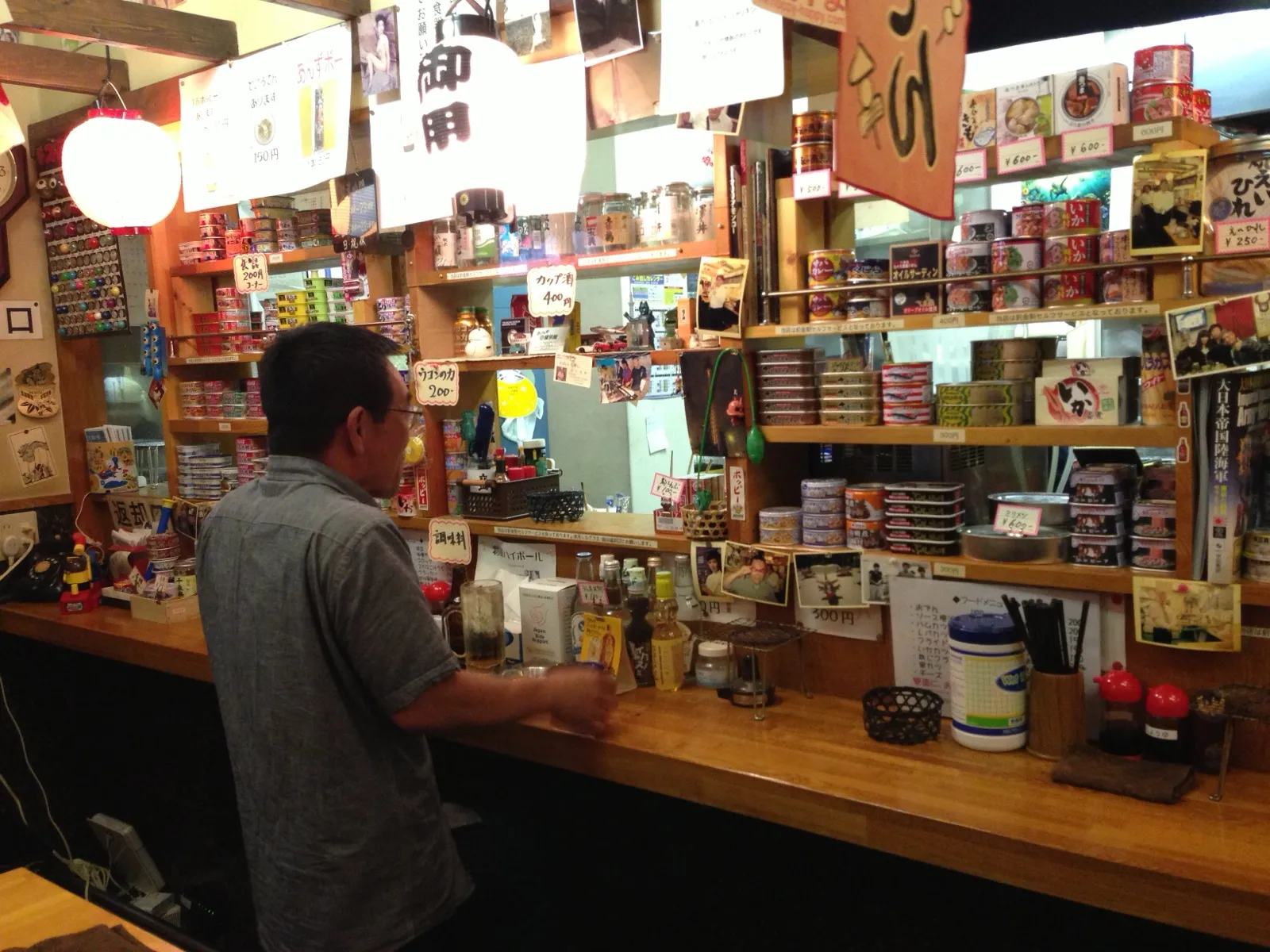
Doesn't look like much, but this was a great bar in Tokyo.
Besides the normal classes, the university gave each of us a Japanese student as a Nihongo partner. They were all very nice, but not everyone clicked with theirs. Some pairs became good friends and still meet up around the world. I feel bad about it, but I can’t remember the names of mine. We talked once a week and struggled to find topics we both cared about, so it never got past small talk.
Making us speak Japanese for an hour or two a week outside class was a good idea. It’s just much more fun to be forced to speak a language while doing something you’d want to do anyway. I always liked a night out, so learning the vocabulary that goes with it was easy.
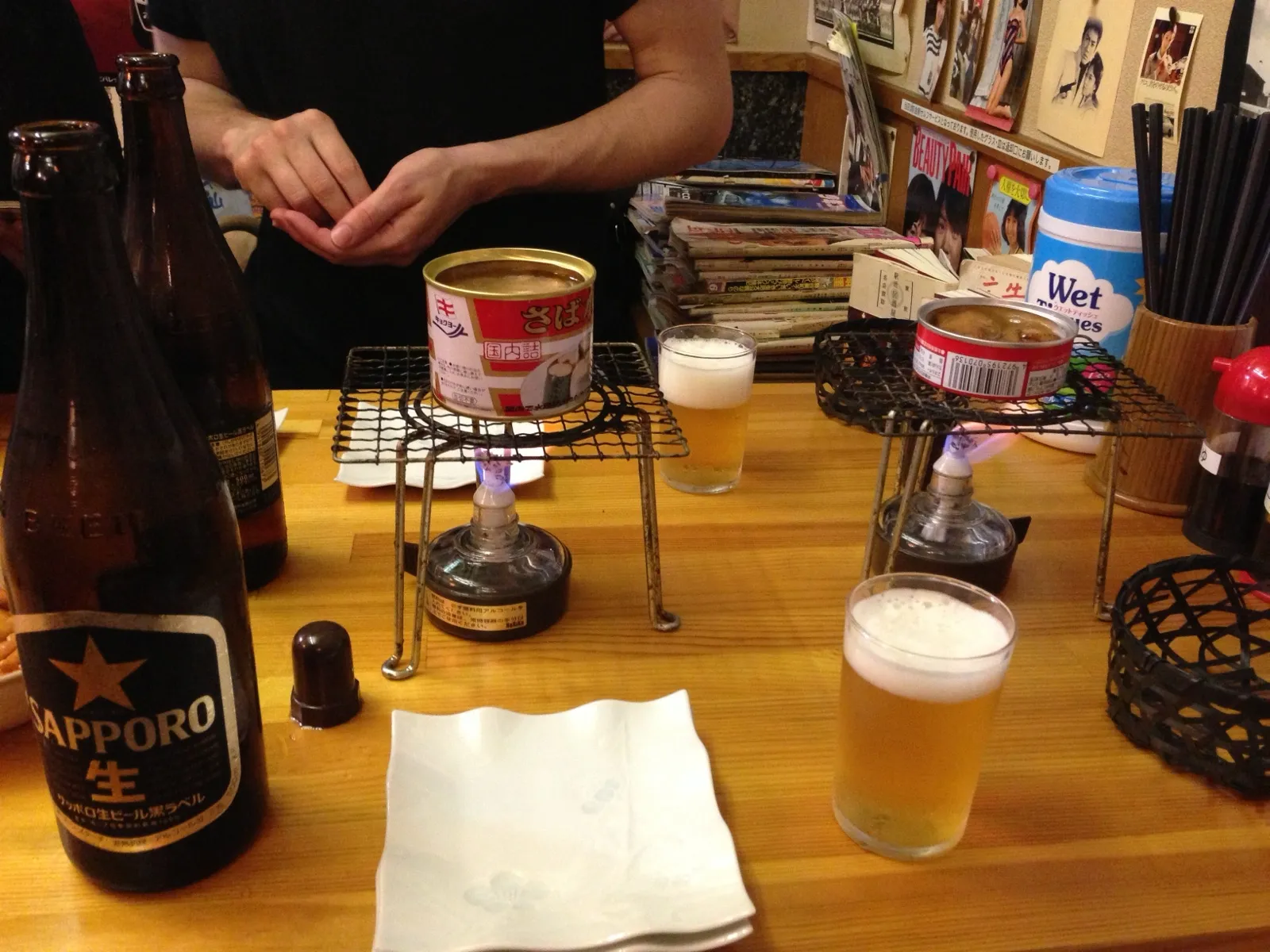
If you got hungry while drinking, you could heat up canned food right at the counter.
Learning a language doesn’t always have to be serious business. Talking in a place I knew and felt comfortable in (with some sake) loosened my tongue, and speaking is still the most important part of practicing a language.